
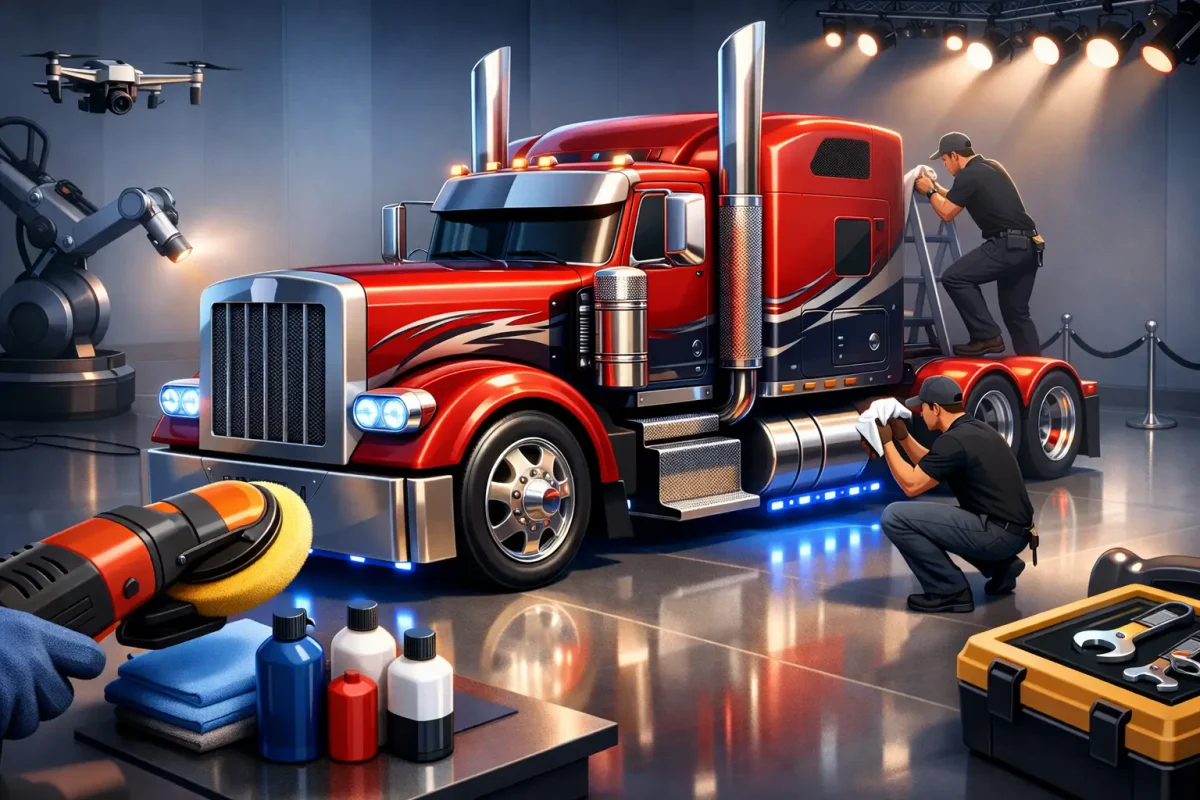
A show field is unforgiving. Under bright daylight, every polished alloy, panel gap, tyre wall and windscreen corner is on display – and the best-looking lorries are rarely the ones that were cleaned in a hurry at 5am. Knowing how to prepare a show lorry means treating the job as more than a wash and wax. It is about presenting the pride, graft and personality behind your vehicle.
Whether you are bringing a hard-working tractor unit, a classic, a fully customised showpiece or a smart fleet vehicle, preparation starts well before the gates open. Give it the time it deserves and your lorry will look the part among the biggest names on the showground.
Start with a clear show-day plan
Decide what you want people to notice first. For some owners, it is a flawless paint finish and mirror-bright stainless steel. For others, it is a period-correct restoration, a striking airbrush design, an immaculate interior or the story behind a vehicle that earns its keep every week.
That decision helps you focus your time and money. A spotless working lorry with honest, well-kept details can make a bigger impression than an over-accessorised build with tired paintwork and neglected wheels. Keep the overall look consistent. If the cab is polished to a high standard, the chassis, trailer, wheel arches and interior need to support it.
Make a realistic schedule. Major corrections such as paint repairs, replacement trims, wheel refurbishment and interior retrimming should be sorted weeks ahead. Leave the final clean, tyre dressing and cab tidy for the last day or two. That reduces the risk of travelling grime undoing hours of work.
Get the exterior clean before you start polishing
A proper wash is the foundation of every strong display. Begin with the roof, sun visor, mirrors and upper cab, then work downwards. Road film often sits around grille openings, door shuts, steps, mudguards, fuel tanks and behind the wheels, so do not just clean what is visible from ten paces away.
Use products suited to the surface. Strong cleaners can be useful on chassis components and greasy areas, but they can also mark polished aluminium, damage delicate finishes or dull certain trims if used carelessly. Always follow product instructions and test an inconspicuous area when you are unsure.
After washing, inspect the paint in direct light. Tar spots, insect marks, water staining and faded patches become obvious when the cab is dry. A clay treatment or suitable decontamination product can help prepare paintwork for polish, while a light machine polish may improve gloss on sound paint. If the finish is badly oxidised, scratched or peeling, professional correction may offer better value than repeatedly covering the issue with shine products.
Finish with a quality protective layer. Wax, sealant or ceramic-style protection can add depth and make final wipe-downs easier at the event. The trade-off is time: a multi-stage correction may produce a spectacular result, but it is not always necessary for a lorry that works for a living. Clean, even and cared-for beats rushed perfection every time.
Do not forget the working areas
Show preparation should not stop at the cab sides. Clean the chassis rails, fifth wheel area, air tanks, mudflaps, catwalk, battery boxes and under-cab spaces. Remove loose rubbish, old cable ties and anything that looks accidental rather than purposeful.
If you display with a trailer, give it the same attention. A polished tractor unit coupled to a dirty trailer creates an immediate mismatch. Curtains should be clean and tensioned, rear doors wiped down, marker lights checked and wheels matched as closely as possible.
Make wheels, tyres and metalwork earn their place
Wheels draw attention because they sit at eye level. Wash them thoroughly, including the inner rims, wheel nuts and valve areas. Once dry, polish metalwork carefully and use a tyre dressing that leaves a smart satin or gloss finish without spraying product over the tread, brakes or surrounding bodywork.
Avoid trying to disguise cracked tyres, damaged wheel trims or corroded components with dressing. Safety and roadworthiness come first, always. If anything needs repair or replacement, deal with it properly before travelling to the event.
Polished tanks, stacks, light bars and stainless accessories can transform a lorry, but they also show fingerprints and water marks quickly. Keep a clean microfibre cloth and a suitable metal polish for a final touch-up. Work methodically and avoid leaving residue around rivets, seams and badges.
Prepare the cab like people will look inside – because they will
A great cab exterior invites people to look through the glass. Clear out everyday clutter, empty drink bottles, paperwork, spare clothing and loose tools. Vacuum the floor, clean the mats, wipe plastics and treat leather or vinyl surfaces with the right product.
Windows should be crystal clear inside and out. Smears on the windscreen can ruin the effect of an otherwise perfect display, particularly when the sun catches them. Clean mirrors, instrument glass and door cards too.
Personal touches are part of show culture, so do not strip all character from the cab. Curtains, memorabilia, model lorries, lighting and carefully arranged accessories can tell your story. The key is presentation. Keep items secure, balanced and tidy, and make sure nothing blocks critical visibility for the journey or interferes with safe operation.
Check lights, electrics and the details judges notice
Before setting off, walk around the vehicle with someone else operating the controls. Check headlights, sidelights, indicators, brake lights, reverse lights, marker lamps and any permitted show lighting. Replace failed bulbs, secure loose wiring and make sure lenses are clean and free from cracks.
Then look at the smaller details: number plates, badges, wiper blades, mirror covers, door handles, mudflaps and wheel nut indicators. These are the areas people notice when they get close. A missing badge or torn mudflap can distract from a stunning paint job.
Bring a compact show-day kit containing clean cloths, glass cleaner, detail spray, tyre dressing, bin bags, cable ties, spare bulbs where appropriate, gloves and a small brush for awkward corners. It saves a lot of stress when a shower passes through or the journey leaves dust on the lower panels.
Travel smart and finish on site
The journey to the show is part of the challenge. If possible, avoid unnecessary detours through muddy yards, building sites or heavily salted roads. Leave enough time to arrive without rushing, especially if you need to queue, park precisely and give the vehicle a final once-over.
On arrival, let hot components cool before cleaning around them. Use your kit for a careful final detail: wipe water spots, dress tyres, clean the windscreen, straighten curtains and remove any travel litter from the cab. If the ground is dusty, avoid overdoing oily products that can attract grit.
Set up your display with consideration for neighbours and visitors. Keep access routes clear, do not leave cables where people can trip, and follow the event team’s instructions on positioning, engines, generators and display equipment. A show vehicle should look spectacular without becoming a hazard.
Bring the story as well as the shine
The lorries that draw a crowd often have more than a glossy finish. A small, clear display board can explain the vehicle’s name, its age, the work it does, its restoration journey or the people behind it. This is especially worthwhile for classics, charity vehicles, family businesses and builds with serious custom work.
Be ready for a chat. Lorry shows bring together drivers, operators, families, enthusiasts and youngsters seeing a show lorry up close for the first time. A friendly word about the build, the route it has travelled or the work behind the paint can be as memorable as the vehicle itself.
At Truckfest, the show field is built on that shared pride. Bring a lorry that is clean, safe, well-presented and unmistakably yours – then give yourself a moment to step back, see it in the line-up and enjoy the reaction it earns.